
nascondere
Understanding the True Shipping Damage Financial Impact
The Urgent Need for Freight Damage Claim Reduction
Utilizing Cost-Effective Transit Monitoring Tools: Impact Indicator 2
Upgrading Your Supply Chain Financial Risk Management
Protecting Profit Margins in Logistics for the Long Term
Take the Next Step in Supply Chain Financial Risk Management
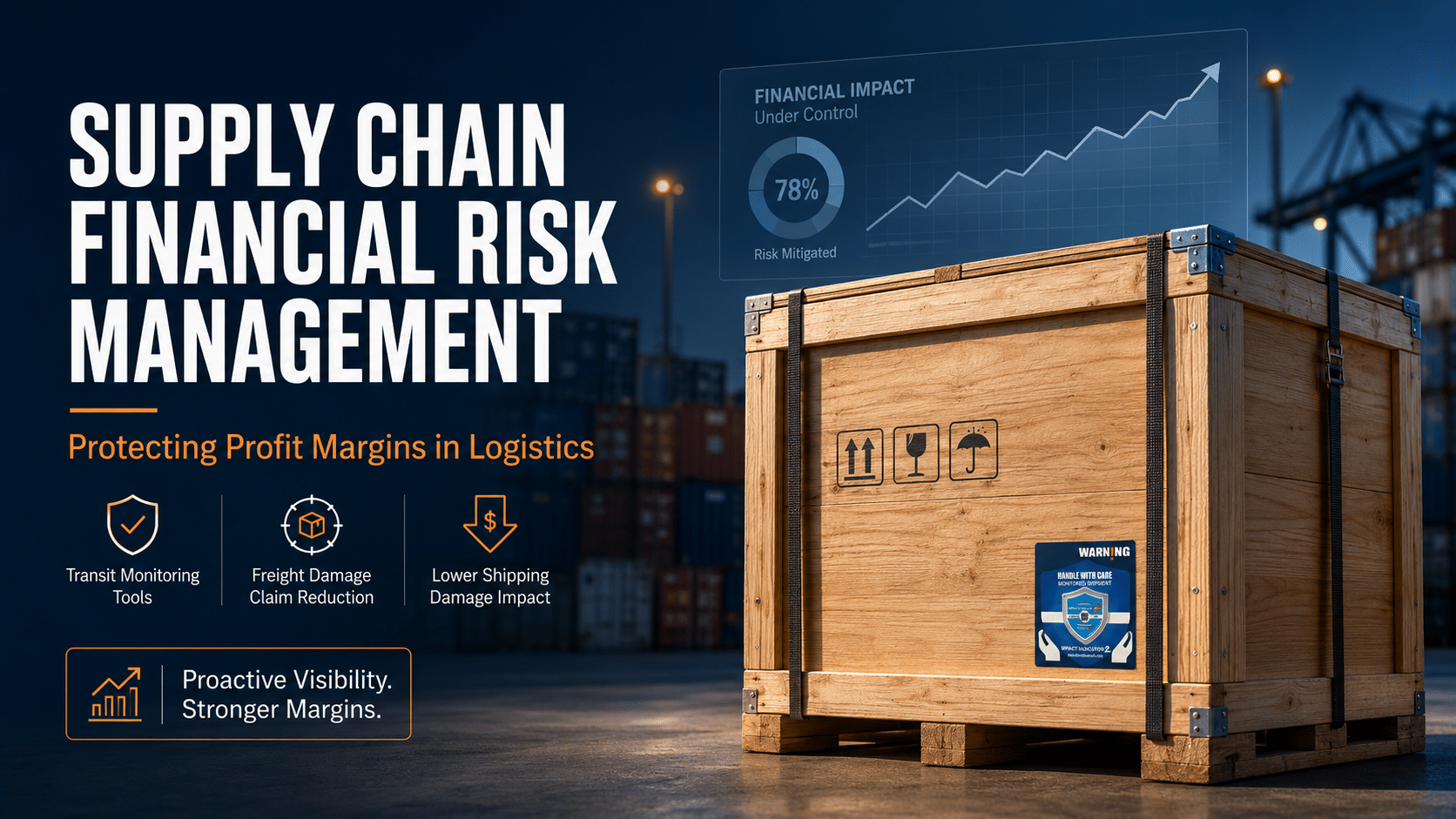
For Chief Financial Officers (CFOs) and supply chain executives, global shipping is more than just moving boxes; it is a complex exercise in supply chain financial risk management. Every time a high-value product leaves your loading dock, it carries the potential for a severe shipping damage financial impact. Executive teams often struggle with protecting profit margins in logistics when unexpected transit damages eat into their quarterly revenues. Fortunately, achieving consistent freight damage claim reduction does not require massive infrastructure overhauls. By implementing cost-effective transit monitoring tools like the Impact Indicator 2, financial leaders can transform unpredictable shipping losses into measurable, controlled, and highly profitable outcomes.
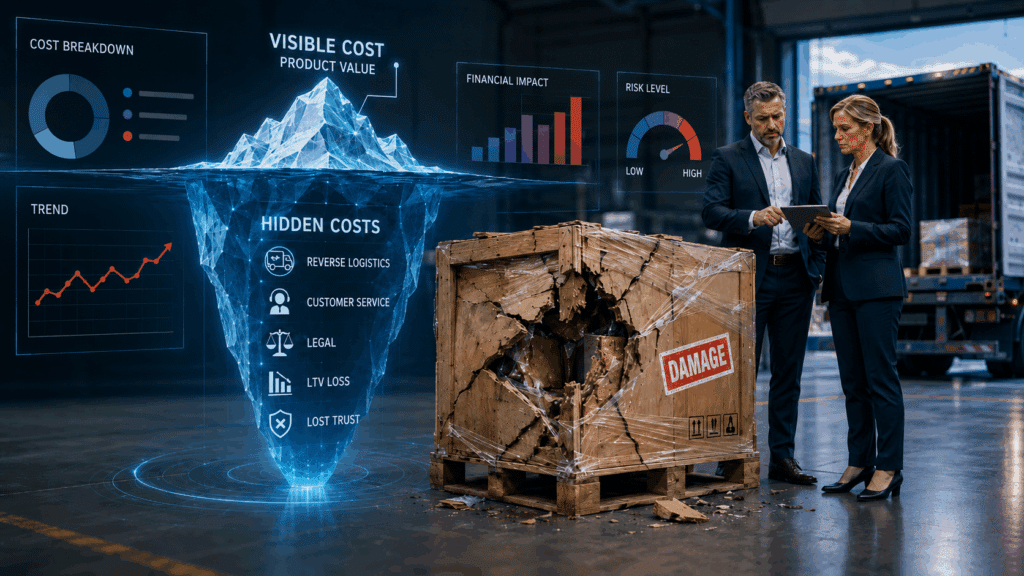
When goods are destroyed during international transit, the invoice price of the broken product is only a fraction of the total corporate loss. The real shipping damage financial impact involves a massive iceberg of hidden costs that traditional accounting software often misses. These include double reverse logistics fees, the labor opportunity cost of your customer service and legal teams handling complaints, and the irreversible erosion of Customer Lifetime Value (LTV). When a highly anticipated B2B shipment arrives damaged, the resulting loss of client trust can destroy years of business relationship equity. Recognizing this chain reaction of hidden costs is the first critical step in modern supply chain financial risk management.
Many corporate finance departments mistakenly rely entirely on standard marine cargo insurance to protect their shipments. However, insurance is a reactive defense mechanism. Constant claims lead to sky-high deductibles, rising annual premium inflation, and cash flow bottlenecks during long, drawn-out legal disputes with carriers. Proactive freight damage claim reduction is the only sustainable strategy for long-term growth. By preventing the damage from happening in the first place, you preserve your company's historical risk data. This gives your procurement team massive leverage to negotiate lower premium rates with insurance brokers. Active freight damage claim reduction keeps your capital fluid and your daily operations smooth.
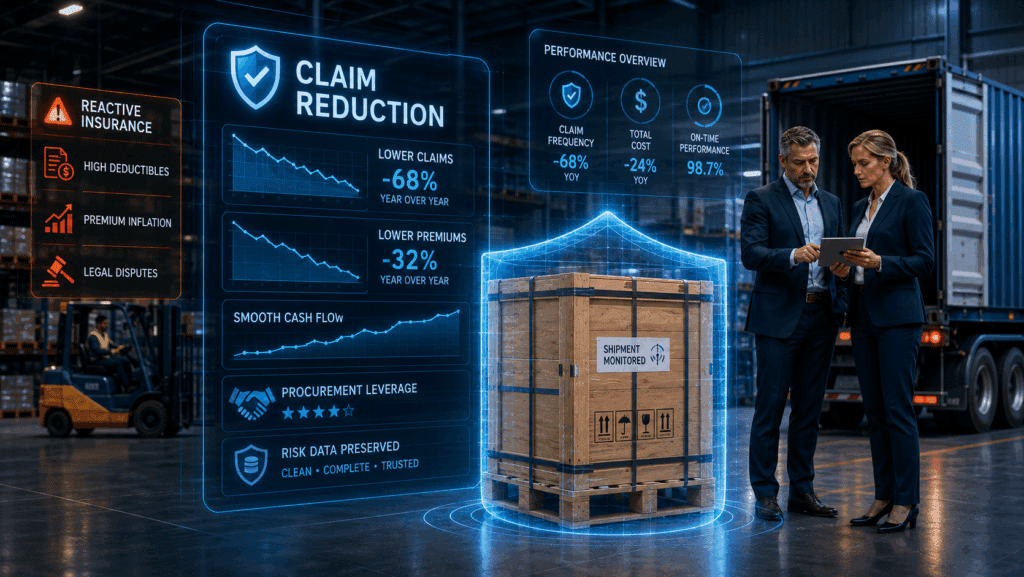
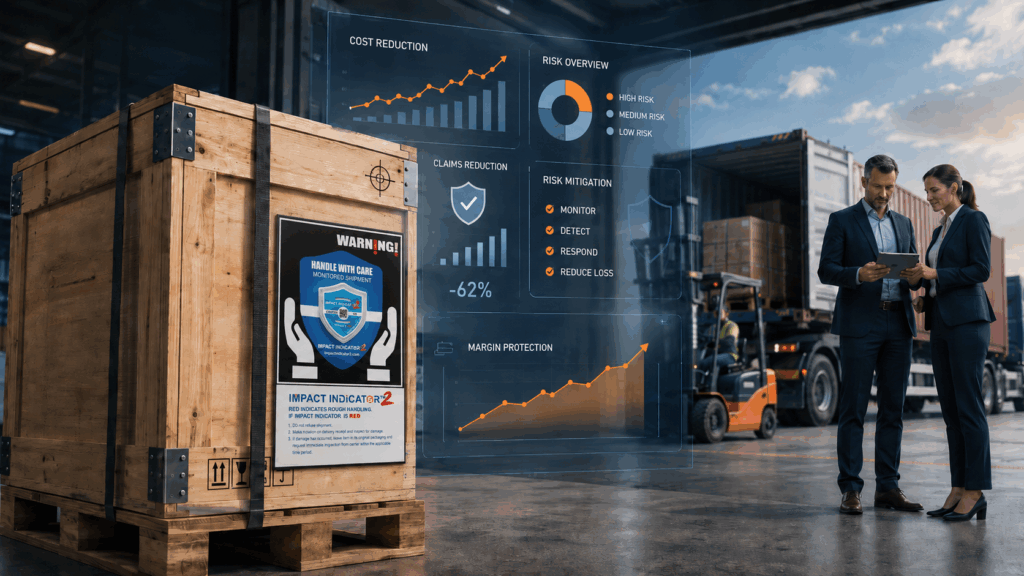
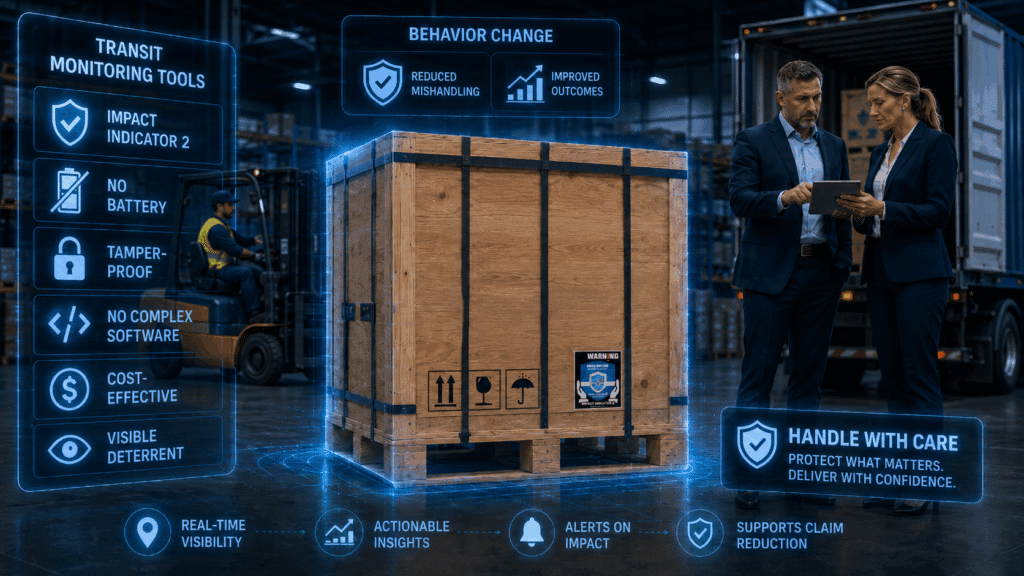
To stop financial leaks, companies need immediate supply chain visibility without massive capital expenditures. This is exactly where cost-effective transit monitoring tools become essential. The Impact Indicator 2 provides a highly visible, tamper-proof solution that does not require batteries, complex software integrations, or expensive hardware. When attached to the outside of a shipment, this bright warning label actively alters human behavior. Warehouse staff and local couriers naturally handle the cargo with significantly more care when they know their actions are being monitored. This psychological deterrent makes the Impact Indicator 2 one of the most powerful and cost-effective transit monitoring tools available on the global market today.
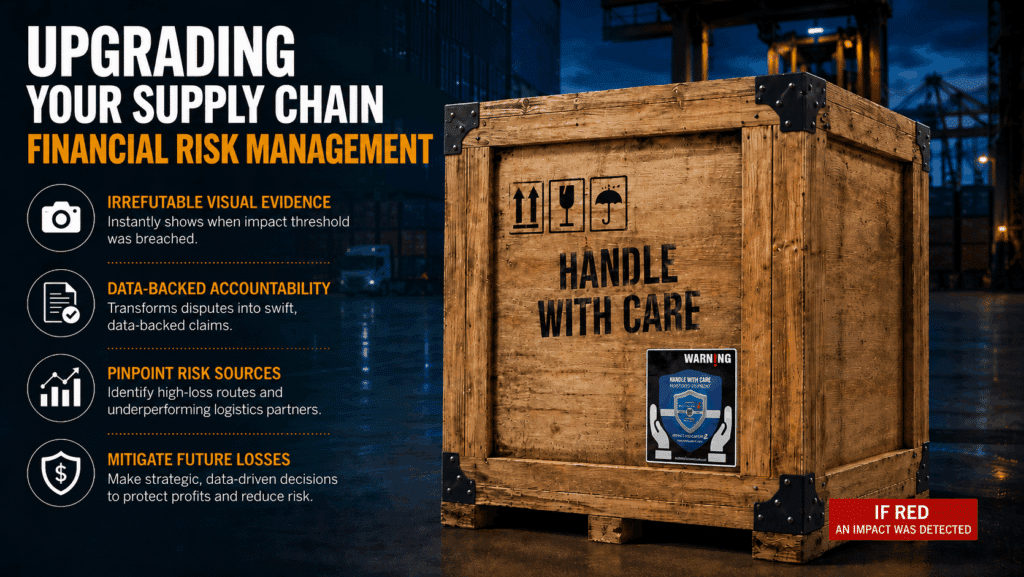
Implementing the Impact Indicator 2 goes far beyond simple physical packaging protection; it upgrades your entire corporate framework for supply chain financial risk management. When a shipment does encounter severe mishandling, the indicator instantly provides irrefutable visual evidence of the exact moment the impact threshold was breached. This transforms frustrating arguments with logistics carriers into swift, data-backed accountability. Financial controllers can use this clear evidence to pinpoint exactly which shipping routes or logistics partners are causing the most losses, allowing for strategic, data-driven decisions that actively mitigate future financial risks.
In a highly competitive global economy, the most successful corporations are those that ruthlessly eliminate operational waste. Protecting profit margins in logistics requires moving away from the outdated mindset that cargo damage is just an unavoidable "cost of doing business." By utilizing the Impact Indicator 2, your enterprise can drastically lower its structural damage rates. As the largest OEM manufacturer in Asia with a 35% global market share, WAN-YO understands that true logistical success equals financial success. Start focusing on protecting profit margins in logistics today by utilizing smart, preventative measures that guarantee your bottom line remains just as secure as your cargo.
Don't let unexpected transit losses dictate your quarterly financial performance. Protecting profit margins in logistics requires moving from reactive insurance claims to proactive visibility. Discover how the Impact Indicator 2 can secure your bottom line.
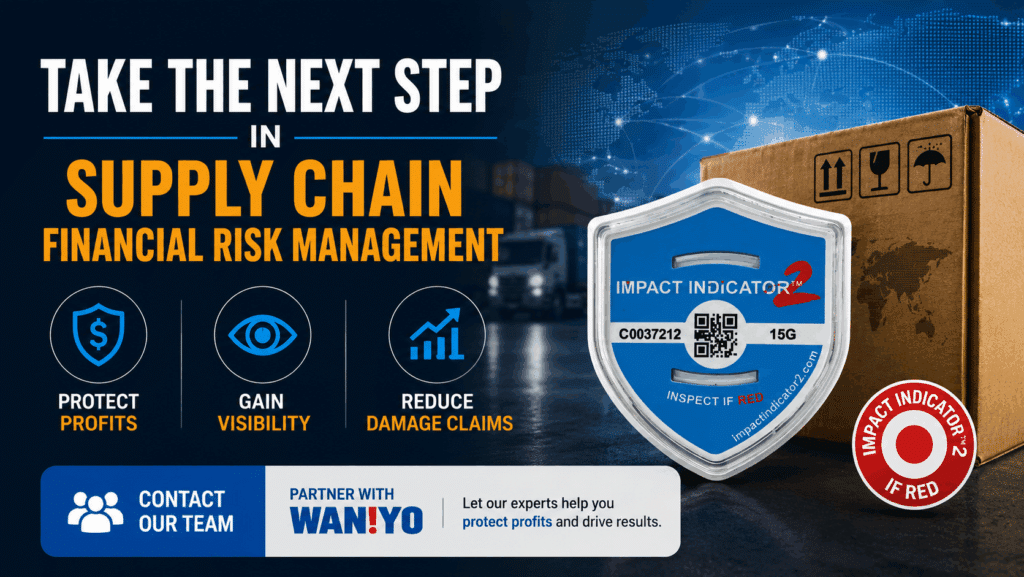
Partner with WAN-YO today. Let our engineering team show you how implementing cost-effective transit monitoring tools can drive immediate freight damage claim reduction and shield your enterprise from the shipping damage financial impact—100% risk-free.