
hide
The Hidden Factory Threat: Concealed Damage in Incoming Parts
Shifting Left: Enforcing Supplier Packaging Compliance Before Dispatch
Step-by-Step Incoming Cargo Inspection SOP for Receiving Docks
Upgrading Inbound Logistics Quality Control with Impact Indicator 2 and Leaning Label Plus 20°/80°
Standardizing Supplier Packaging Compliance to Prevent Line-Down Shipping Damage
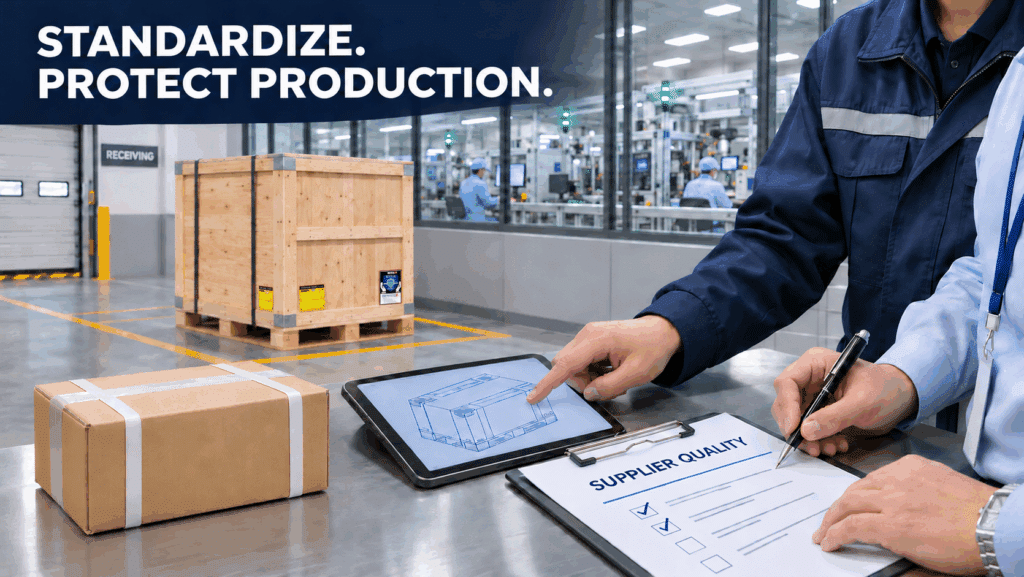
Proactive inbound logistics quality control is the most reliable way to prevent line-down shipping damage before defective components ever reach your assembly floor. Most manufacturing plants invest heavily in protecting outbound finished products, yet they leave their incoming supply chain completely unmonitored. Every day, high-value sub-assemblies, precision sensors, optical modules, and structural frames travel from Tier-1 and Tier-2 vendors to your factory receiving dock. When these components suffer rough handling during transit, the resulting concealed damage in incoming parts can silently pass through basic visual checks, halt your mass-production line, and trigger massive financial losses.
Relying solely on supplier warranties or freight insurance does not fix a stopped assembly line. When a critical component fails during final assembly because it was dropped on a loading dock three days earlier, your plant faces emergency air-freight fees, missed customer delivery deadlines, and wasted labor hours. By enforcing strict supplier packaging compliance and deploying a clear incoming cargo inspection SOP with physical monitoring tools like the Impact Indicator 2 and Leaning Label Plus 20°/80°, quality and procurement teams can catch transit abuse at the dock door and keep production running smoothly.
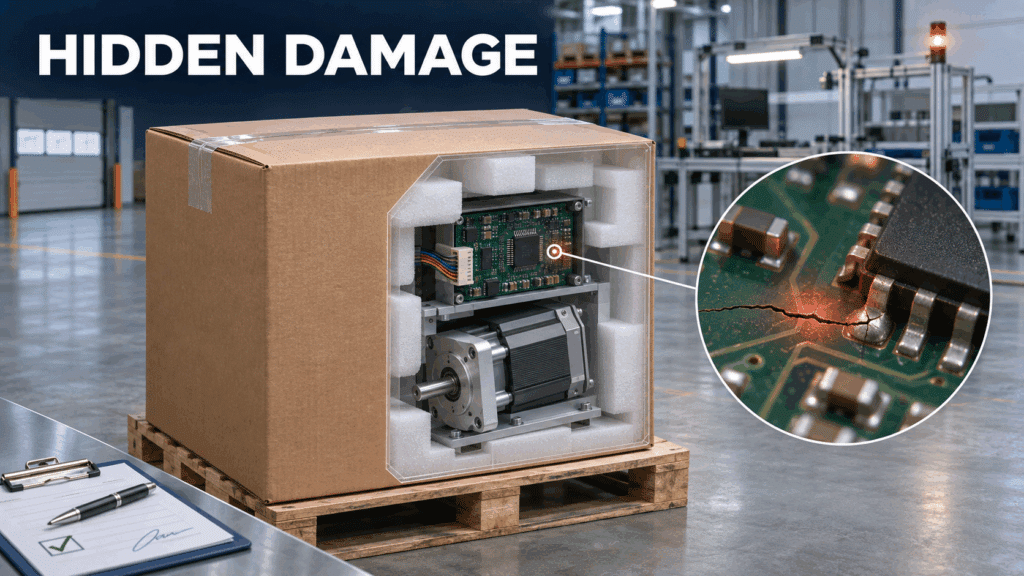
The biggest danger on any manufacturing receiving dock is concealed damage in incoming parts. When a freight carrier drops a palletized carton or tips a heavy crate during cross-docking, standard corrugated cardboard and foam inserts often bounce back to their original shape. From the outside, the shipment looks completely normal.
Because the outer packaging shows no obvious punctures or crushed corners, receiving clerks routinely sign a clean Proof of Delivery (POD) or Bill of Lading (BOL). That single signature legally releases the freight carrier from transit liability. Days or weeks later, when operators pull those parts from warehouse inventory onto the assembly line, hidden defects emerge:
Once these damaged components enter production, tracing the root cause becomes an expensive battle. Your supplier insists the parts passed outgoing quality control before dispatch, the logistics provider points to the clean delivery receipt, and your plant absorbs the scrap cost and downtime.
To break this cycle, leading quality managers apply a "Shift Left" strategy—moving inspection checkpoints upstream to the vendor's shipping dock before cargo ever leaves their facility. Establishing mandatory supplier packaging compliance requires vendors to affix tamper-proof shock and tilt monitors onto every high-risk shipment.
Requiring upstream vendors to keep a visible shock indicator watching every crate transforms how freight is handled across the entire journey. Grounded in behavioral psychology, visible monitoring creates immediate accountability for forklift operators, truck drivers, and warehouse handlers. When handlers see bright, tamper-proof indicators on the exterior of a crate, they naturally slow down, take wider turns, and place loads gently rather than dropping them.
Just as importantly, mandating transit indicators establishes an indisputable chain of custody:
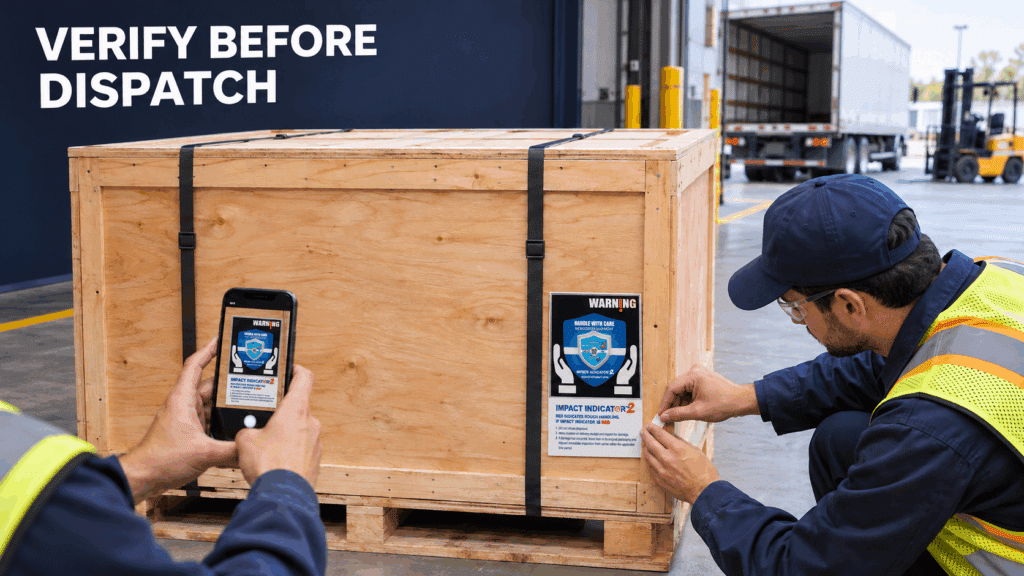
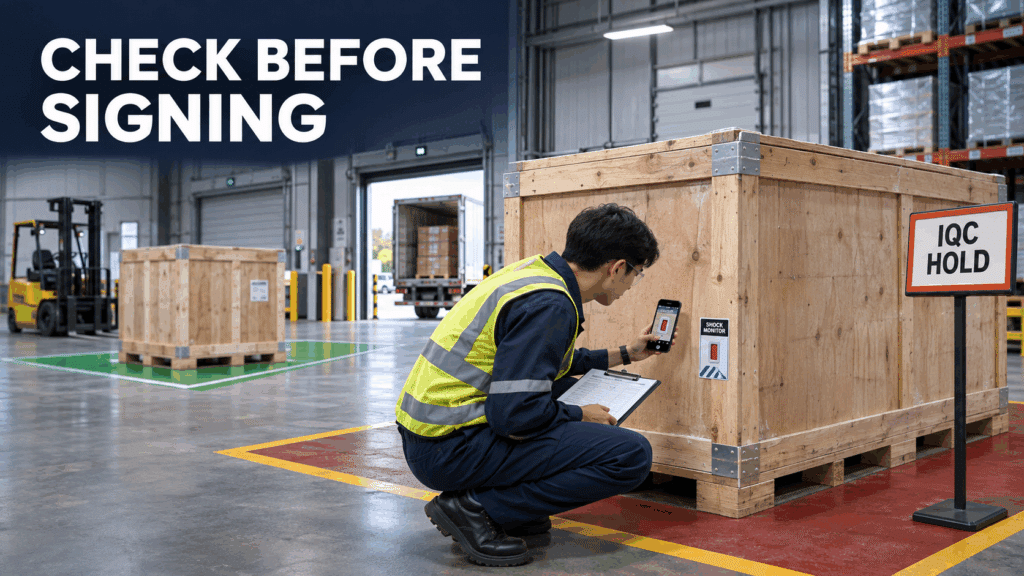
A monitoring label only protects your factory if your receiving team knows how to act when an alert triggers. Implementing a standardized incoming cargo inspection SOP ensures warehouse staff can verify shipment integrity in less than three seconds without slowing down dock throughput.
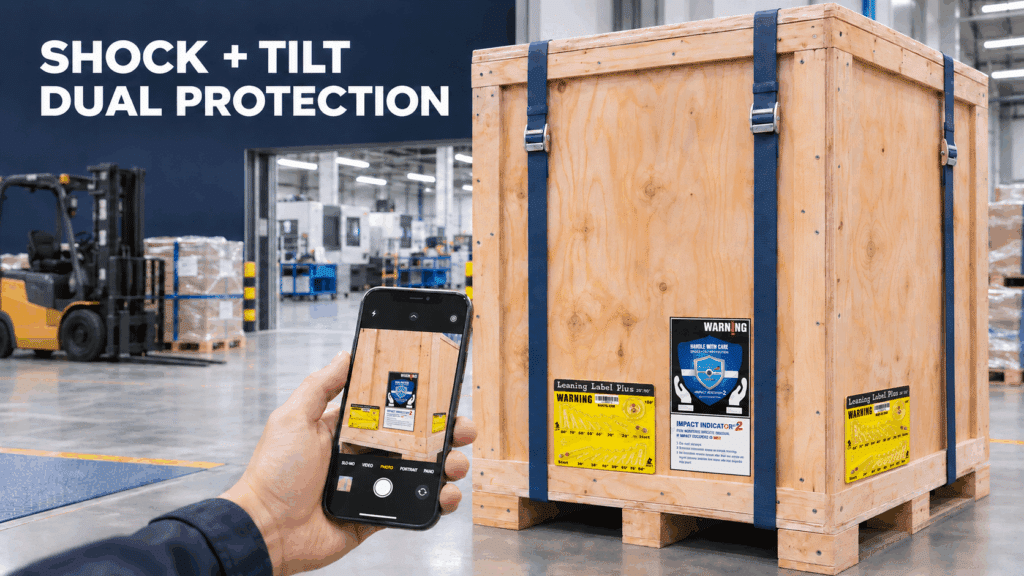
Require suppliers to mount the indicators at structurally rigid points on the packaging—typically the lower corner of the crate for shock sensors and the upper center-of-gravity zone for tilt sensors. Suppliers must also place a Companion Label next to the device and affix a small Alert Sticker directly onto the Bill of Lading (BOL) to notify drivers that active monitoring is in place.
Train receiving clerks to inspect the external indicators before signing the carrier's delivery receipt or electronic handheld terminal. Clerks do not need special tools or training to check whether a mechanical indicator has turned red or locked into an angle pocket.
Define clear action paths based on the visual status of the labels:
IQC engineers inspect quarantined parts before they ever touch the production line. If functional defects are found, your procurement and logistics teams already hold time-stamped, tamper-proof evidence to file a successful carrier freight claim or enforce vendor packaging penalties.
When procurement managers introduce new inbound logistics quality control mandates, suppliers often push back if they are forced to buy expensive legacy brands with long international backorders. If a Tier-2 vendor delays your component shipments because they cannot source overpriced labels, your mandate creates the very supply shortage you wanted to avoid.
Specifying Impact Indicator 2 and its sister product, Leaning Label Plus 20°/80°, removes supplier resistance while delivering industrial-grade protection.
The Impact Indicator 2 is a purely mechanical, 100% battery-free shock sensor engineered for global supply chains. Because it contains no lithium batteries or electronic circuits, suppliers face zero IATA air-freight dangerous goods restrictions or customs delays. Its calibrated mechanical trigger eliminates false alarms caused by normal truck road vibration, activating only when a genuinely damaging impact occurs. With cost-effective wholesale pricing and fast, predictable factory lead times, your entire supplier network can adopt it immediately without inflating component costs.
Many incoming industrial assemblies—such as server racks, precision CNC spindles, medical imaging modules, and chemical drums—suffer severe internal damage if tilted even slightly. Standard market tilt indicators do not trigger until a crate leans 30° or 45°, missing early-stage tipping events.
For high-center-of-gravity shipments, require suppliers to equip crates with a precision tilt indicator, plus calibrated shock labels. WAN-YO’s Leaning Label Plus 20°/80° breaks industry limits by offering exclusive 20° and 30° early tilt detection alongside full 20° to 80° left-and-right angle tracking and 180° complete overturn monitoring. Once the internal brass indicator balls roll into an angle pocket, a patented anti-backtrack groove mechanism locks them permanently in place. Even if a forklift driver rights a tipped crate immediately, the physical evidence cannot be reset or concealed.
For teams seeking digital visibility without software budgets, both indicators also connect seamlessly with WAN-YO’s free Goods Tracking System (GTS), allowing suppliers and IQC clerks to scan serialized barcodes via smartphone with zero subscription fees or restrictions.
To turn these safeguards into permanent policy and prevent line-down shipping damage, add clear monitoring requirements directly into your Vendor Routing Guide or Supplier Quality Agreement. Below is a practical clause that SQE and procurement leaders can adapt for supplier onboarding:
Sample Supplier Quality Manual Clause — Transit Monitoring: "For all shipments exceeding [Weight/Value Threshold] or classified as shock- and tilt-sensitive, the Supplier must affix calibrated mechanical shock indicators (Impact Indicator 2) and, where specified on the packaging drawing, multi-angle tilt monitors (Leaning Label Plus 20°/80°) prior to carrier handover. Indicators must remain unactivated upon departure and be documented on the Bill of Lading. Shipments arriving at Buyer’s dock with activated indicators will be placed in IQC quarantine, and all resulting inspection, rework, or freight claim costs will be charged back to the responsible party."
Protecting your assembly line starts long before parts reach your factory gates. By enforcing supplier packaging compliance, standardizing your incoming cargo inspection SOP, and equipping your vendor network with Impact Indicator 2 and Leaning Label Plus 20°/80°, you eliminate concealed damage in incoming parts and safeguard your production schedule.