
hide
The Costly Blind Spot in Warranty Claim Logistics
The Proactive SOP: Return Merchandise Transit Monitoring from the Empty Crate
360-Degree Protection: Equip a Tilt Indicator, Plus Precision Impact Labels
Why Impact Indicator 2 is Your Perfect Reverse Logistics Tracking Partner
Secure Your Supply Chain and Stop Warranty Claim Losses Today
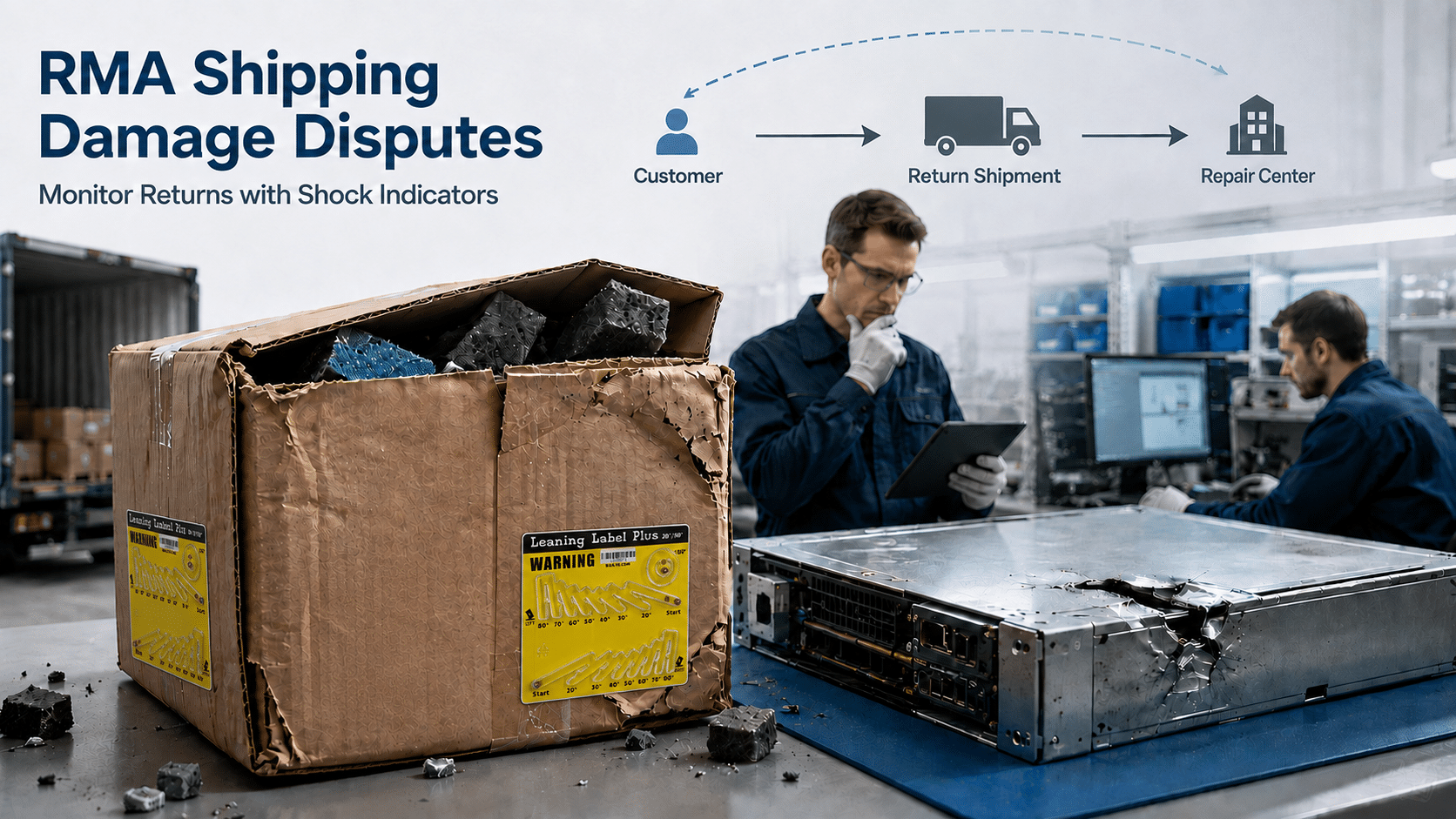
When facing costly RMA shipping damage disputes, you must keep a reliable shock indicator watching your reverse logistics journey from start to finish. In the global manufacturing and high-tech equipment industries, shipping outbound products is usually a highly controlled process. You have strict packaging guidelines, drop test reports, and quality assurance teams ensuring every outbound crate is perfectly safe. However, when a customer requests a Return Merchandise Authorization (RMA) for a repair or warranty claim, that perfect control entirely disappears.
Reverse logistics is often considered the "blind spot" of the supply chain. Customers frequently pack delicate, high-value equipment—such as semiconductor testing modules, expensive servers, or medical devices—into unverified cardboard boxes with inadequate bubble wrap. When the equipment arrives at your repair center completely shattered, a frustrating and expensive argument begins. The customer blames the shipping carrier; the shipping carrier blames the customer's poor packaging; and ultimately, your company is forced to absorb the financial loss to save the client relationship.
To protect your profit margins and maintain strong customer relationships, you need a proactive system. This comprehensive guide will explore how to completely eliminate the guesswork in warranty claim logistics by deploying a smart, cost-effective return merchandise transit monitoring strategy using precision impact and tilt indicators.
Why is reverse logistics so dangerous for your bottom line? The answer lies in the lack of undeniable evidence. In traditional warranty claim logistics, the burden of proof almost always falls on the original manufacturer.
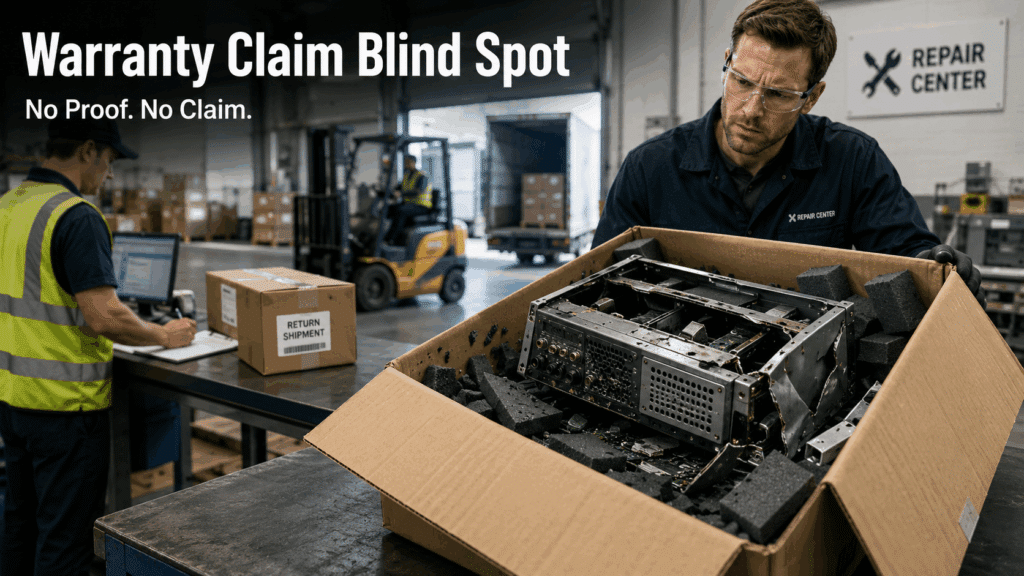
Consider this common scenario: A client sends back a $50,000 piece of testing equipment because of a minor software glitch. During the return transit, a forklift operator drops the box. Because there is no visible damage to the outside of the generic cardboard box (a situation known as concealed damage), the receiving dock signs for the package without noting any issues. When your engineers finally open the box days later, they discover the internal hardware is destroyed.
Because you cannot prove exactly when or where the damage occurred, the freight carrier will automatically reject your damage claim. You are now forced to replace a $50,000 machine at your own expense. This "he said, she said" dynamic ruins the profitability of your after-sales service department.
To solve this, your repair center must transition from a reactive approach (arguing about damage after it happens) to a proactive approach (gathering physical evidence during the journey). You need a standardized method for reverse logistics tracking that provides a clear, visual warning the moment a package is mishandled.
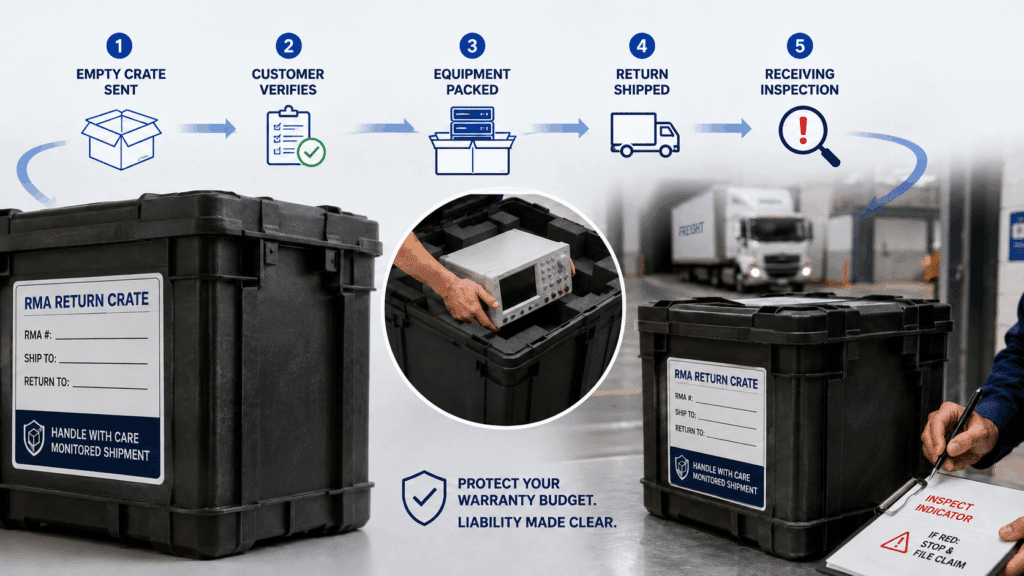
The most effective way to eliminate RMA shipping damage disputes is to stop relying on the customer's own packaging materials. Top-tier manufacturers are now adopting a brilliant, foolproof Standard Operating Procedure (SOP): The Pre-Labeled Empty Return Crate.
Instead of asking the client to find a box, your RMA department sends a custom-fitted, highly secure empty crate directly to the client's facility. But here is the critical secret to this strategy: before you ship the empty crate, you pre-install a tamper-proof shock indicator directly onto the packaging.
Here is how this simple but powerful SOP works to secure your return merchandise transit monitoring:
With this SOP, liability is never a question. If the label turns red on the way back, the carrier is held 100% accountable, and your warranty budget is completely protected.
While a shock indicator is fantastic for detecting drops and impacts, many high-value RMA items face a different type of danger. Heavy items with a high center of gravity—such as server racks, large optical lenses, or industrial liquid cooling units—are extremely vulnerable to being tipped over or stored horizontally when they must remain upright.
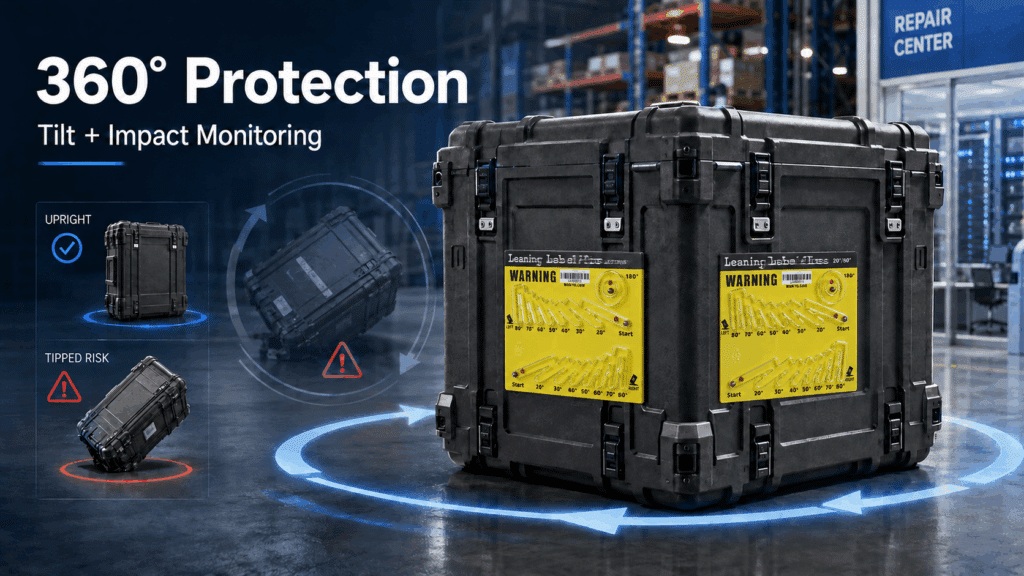
For these sensitive return shipments, monitoring for impact alone is not enough. To achieve true 360-degree protection, you must equip the return crate with a highly accurate tilt indicator, plus our precision impact labels.
Because reverse logistics can be so unpredictable, you need the highest level of sensitivity available. Through our globally renowned parent brand, WAN-YO, we offer the ultimate solution for strict inclination monitoring: the Leaning Label Plus 20°/80°.
While most standard tilt monitors in the industry only trigger at a 30-degree or 45-degree angle, the Leaning Label Plus 20°/80° introduces an industry-first 20-degree minimum detection zone. This makes it the perfect sister product to complement our shock monitoring line.
If your customer is returning an ultra-sensitive precision instrument that can suffer severe concealed damage at very slight angles, the Leaning Label Plus 20°/80° acts as a strict, permanent referee. It features a patented anti-backtrack groove mechanism. Once the cargo tilts past 20 degrees, the indicator locks into place. Even if a careless forklift driver tries to stand the crate back up, the evidence of the tilt remains permanently recorded, guaranteeing your success in a freight damage claim.
When implementing a large-scale return crate program, procurement managers often worry about the cost of consumable labels. If you are forced to buy expensive, legacy American brands for every single RMA crate, the operational costs can quickly spiral out of control.
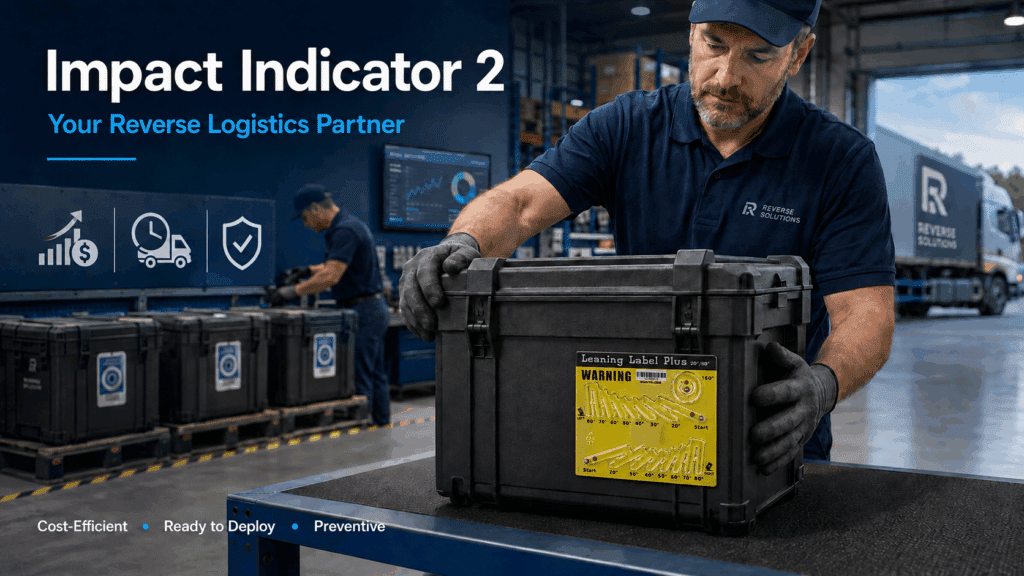
This is why the Impact Indicator 2 is rapidly becoming the standard choice for reverse logistics tracking worldwide. It offers three distinct advantages for after-sales service departments:
You do not have to accept RMA shipping damage disputes as a normal cost of doing business. By taking control of the return process, providing pre-labeled empty crates, and utilizing professional monitoring tools, you can turn a chaotic reverse logistics network into a highly secure, data-driven operation.
Do not let freight carriers deny your rightful claims simply because you lack the physical evidence. Whether you need a highly calibrated shock indicator, or an ultra-sensitive tilt indicator, plus expert supply chain advice from our parent company WAN-YO, we have the exact tools you need to succeed.
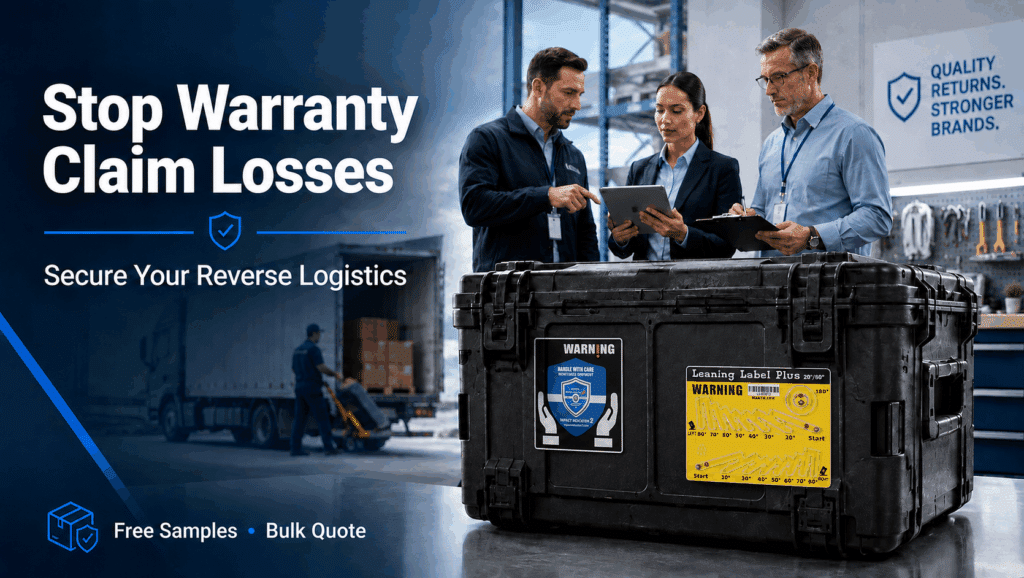
For After-Sales Directors & RMA Managers: Ready to stop arguing with customers and carriers over broken returns? Validate your new reverse logistics SOP today. We provide free testing materials so you can prove the ROI to your executive team.
For Procurement & Supply Chain Executives: Are you looking for a drop-in replacement that offers superior quality control without the bloated legacy brand premium? Secure a reliable, cost-effective supply for your global repair network.