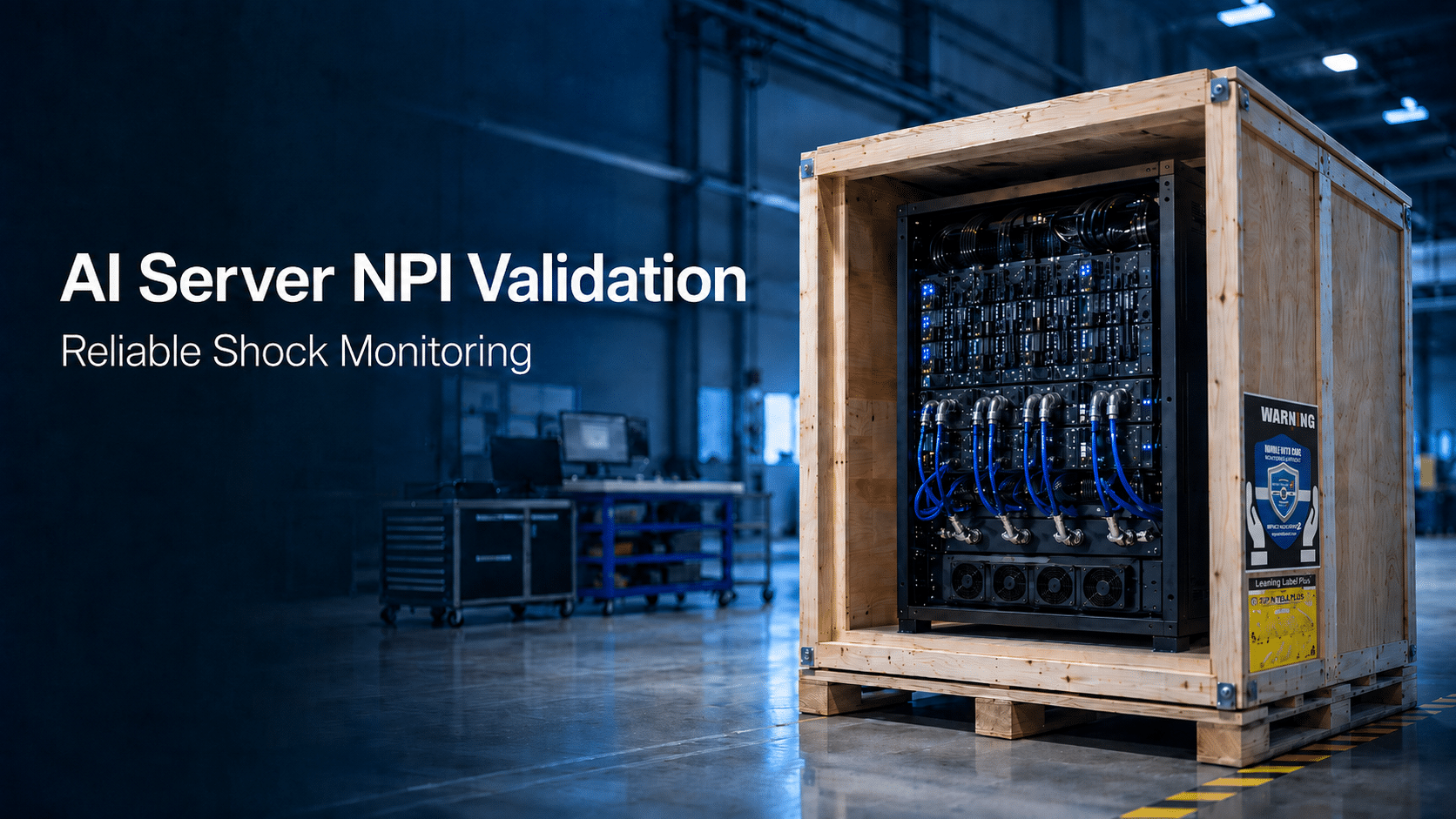

In the high-stakes world of AI server NPI validation, you must keep a highly reliable shock indicator watching your cargo from the assembly line all the way to the final data center floor. The artificial intelligence boom has revolutionized contract manufacturing, but it has also introduced unprecedented logistical challenges. Today’s AI server racks, fully loaded with high-density GPUs, complex liquid cooling manifolds, and delicate interconnects, are essentially million-dollar glass houses. Even the slightest mishandling during global transit can result in microscopic motherboard fractures or catastrophic coolant leaks.
As an R&D or packaging engineer, your job during the New Product Introduction (NPI) phase is to design a packaging protocol that guarantees a zero percent damage rate. However, a massive hidden risk lies not in the packaging materials themselves, but in the supply chain of the monitoring labels you specify on your Bill of Materials (BOM).
If you are simply defaulting to the industry's default choices, you are setting your mass production up for failure. In this comprehensive guide, we will explore why you must secure your supply chain early, how to build a robust 360-degree monitoring strategy, and why top-tier manufacturers are actively qualifying alternative impact and tilt solutions.
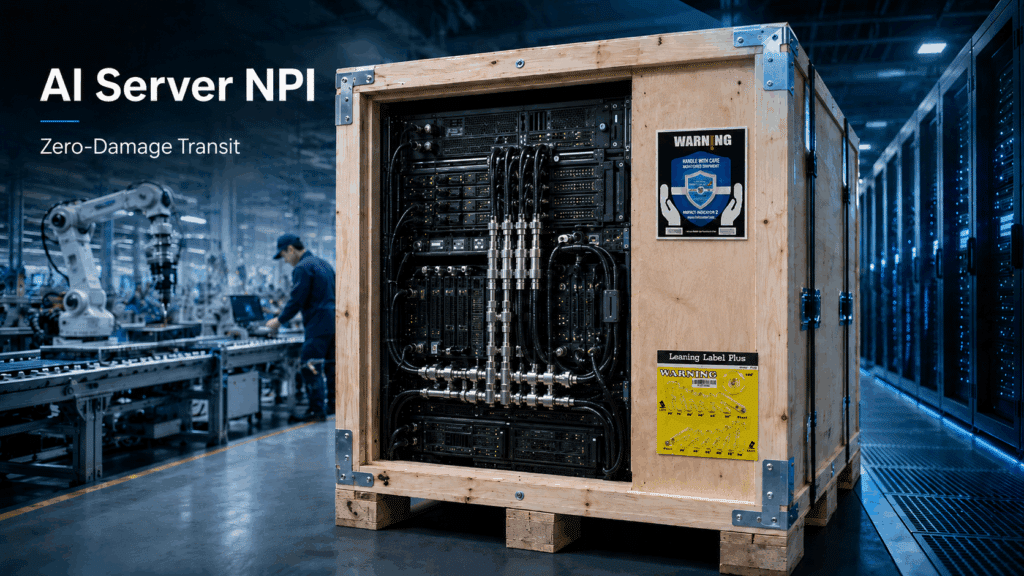
During the rapid pace of NPI drop testing and packaging validation, time is your most precious resource. When a strict US client provides a generic packaging specification, many engineers take the path of least resistance: they simply approve and specify your most commonly used American labels on the BOM.
While this might save a few hours of approval paperwork during the AI Server NPI Validation stage, it creates a ticking time bomb for your procurement and logistics teams once you transition to Mass Production (MP).
What happens when your most commonly used American labels go out of stock during a critical end-of-quarter shipping surge? The reality is grim:
To prevent these mass production nightmares, forward-thinking engineers are using the NPI validation phase to test and qualify the Impact Indicator 2 as a drop-in replacement.
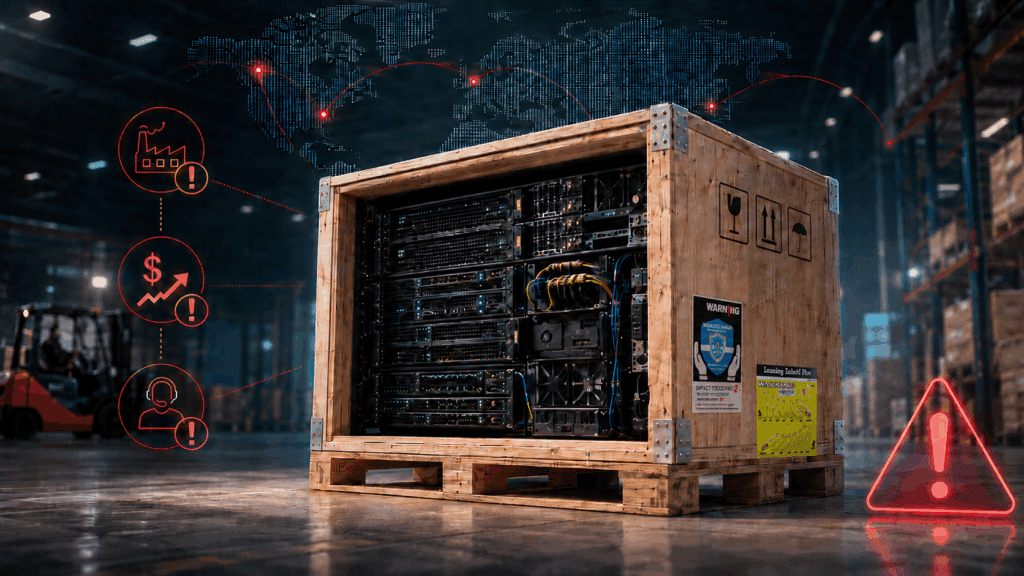
Why is transit monitoring so critical for AI servers compared to traditional enterprise IT equipment? The answer lies in the extreme density and weight distribution of AI hardware.
A fully integrated AI rack (such as an L10, L11, or L12 configuration) can weigh well over 3,000 lbs (1,360 kg). Despite this massive weight, the internal components—such as NVLink bridges, optical transceivers, and fragile liquid-cooling tubes—have an incredibly low G-force tolerance.
When a forklift operator drops a standard pallet of consumer electronics, the cardboard and foam can absorb the shock. When a forklift abruptly drops a 3,000-lb AI server rack, the kinetic energy transfers directly through the chassis. If a liquid cooling tube is slightly jarred loose, the leak will destroy millions of dollars of GPUs the moment the system is powered on at the data center.
Having a mechanical shock indicator watching the crate ensures that every handler, from the local warehouse to the international air freight terminal, treats the cargo with the extreme caution it requires. It serves as both an undeniable visual deterrent and a precise accountability tool for freight claims.
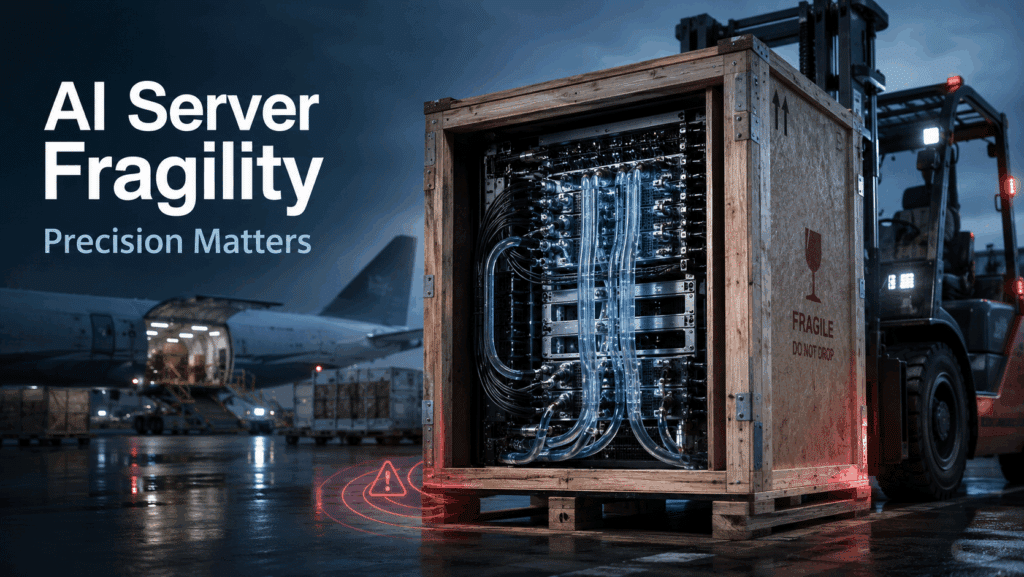
Because AI server racks have a notoriously high center of gravity, monitoring for vertical impact (dropping) is only half the battle. The most common cause of catastrophic damage for these tall, heavy racks is tipping or severe inclination during forklift transport or truck braking.
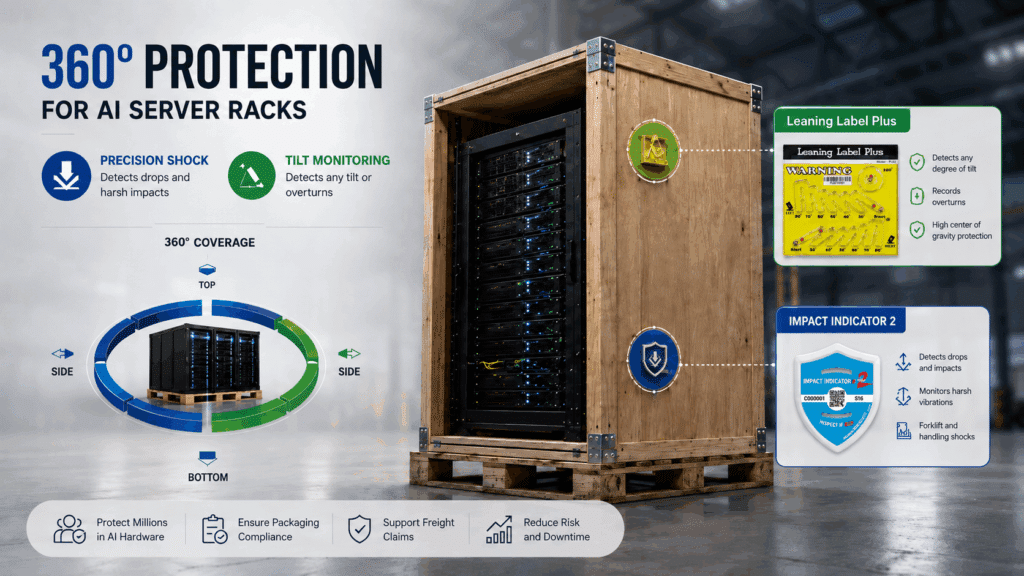
To achieve complete, 360-degree packaging compliance, you cannot rely on a single sensor. You must deploy a multi-axis tilt indicator, plus our highly calibrated Gen 2 impact labels, to monitor the crate from every conceivable angle of failure.
While impactindicator2.com is strictly dedicated to perfecting shock and impact detection, we understand that AI servers require holistic protection. That is why we provide our advanced rollover and inclination monitoring solutions through our sister product line under our globally renowned parent brand, WAN-YO.
By pairing the Impact Indicator 2 with our sister product's precision tilt monitors (such as the Leaning Label Plus), you create an impenetrable shield of accountability.
Together, these tools give your QA team and your end-client absolute certainty that the AI hardware arrived in pristine, factory-validated condition.
We understand that changing a specification requires concrete data. If your US client has specifically requested their most commonly used American brand, you need a solid engineering justification to add the Impact Indicator 2 and our sister products to the Alternate BOM.
Here is how you can pitch this to your clients and QA boards during AI Server NPI Validation:
By taking these steps during the NPI phase, you transform from an engineer simply following a spec into a strategic partner who is proactively protecting the client's supply chain and profit margins.
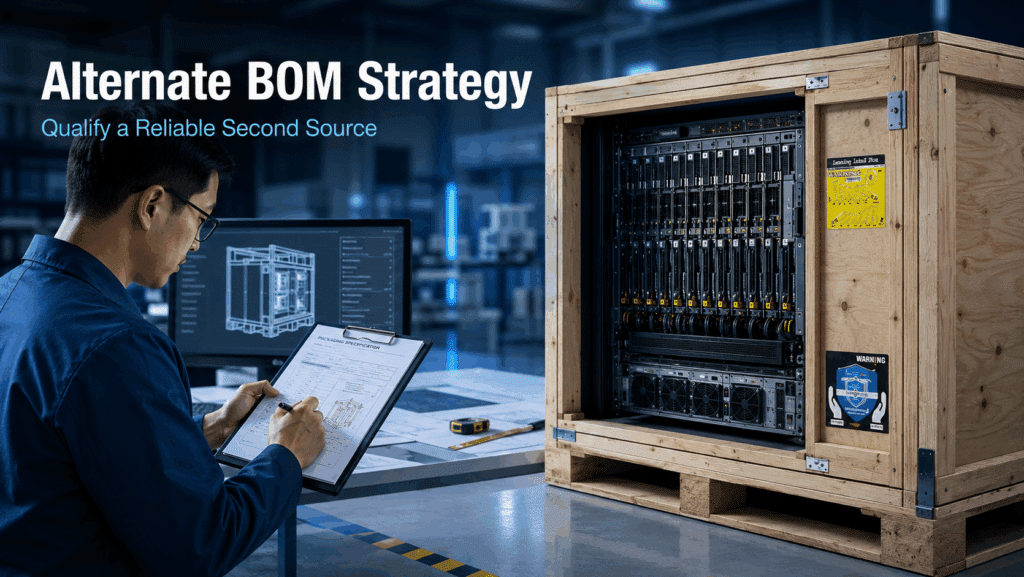
The artificial intelligence hardware race waits for no one. Do not let your company’s massive manufacturing output be bottlenecked by an unreliable supply of legacy monitoring labels. By acting now, you can secure high-quality, cost-effective, and readily available transit monitors that perfectly match your rigorous testing standards.
Whether you need a reliable mechanical impact sensor, or a specialized tilt indicator, plus comprehensive logistics tracking systems from our parent brand WAN-YO, we are your ultimate supply chain partner.
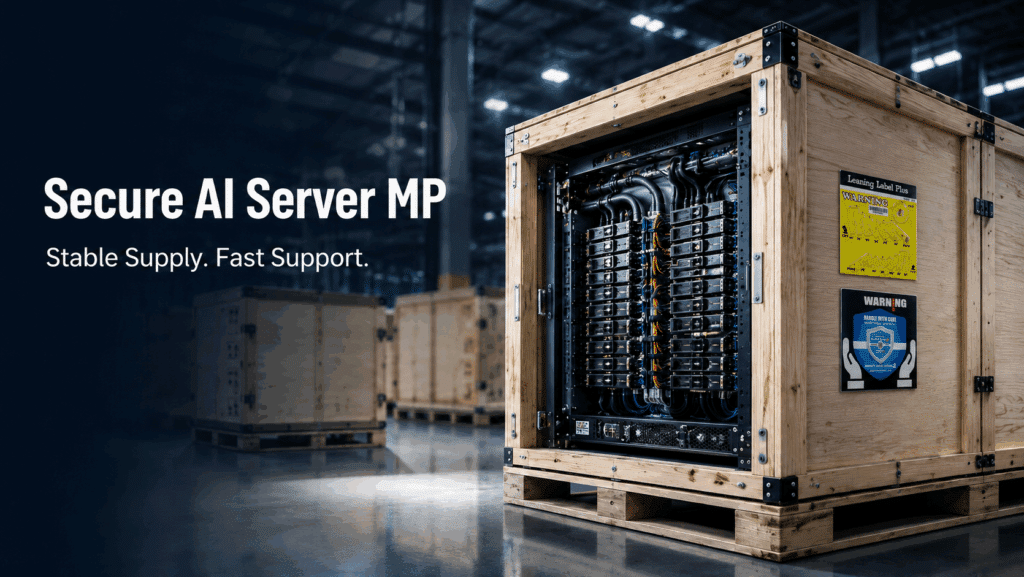
For R&D and Packaging Engineers: Stop waiting weeks for testing materials from rigid legacy suppliers. Validate your AI server packaging SOP the smart way. We provide frictionless support, fast shipping, and all the technical data you need to build your Alternate BOM successfully.
👉 [Request Free Samples for NPI Drop Testing Now]
For Procurement and Supply Chain Managers: Are you tired of paying brand premiums and constantly worrying about when your most commonly used American labels will go out of stock? Partner with an agile manufacturer that guarantees stable lead times and rapid global support for your booming AI server production lines.
👉 [Contact Us for a Bulk Quote and Mass Production Evaluation]