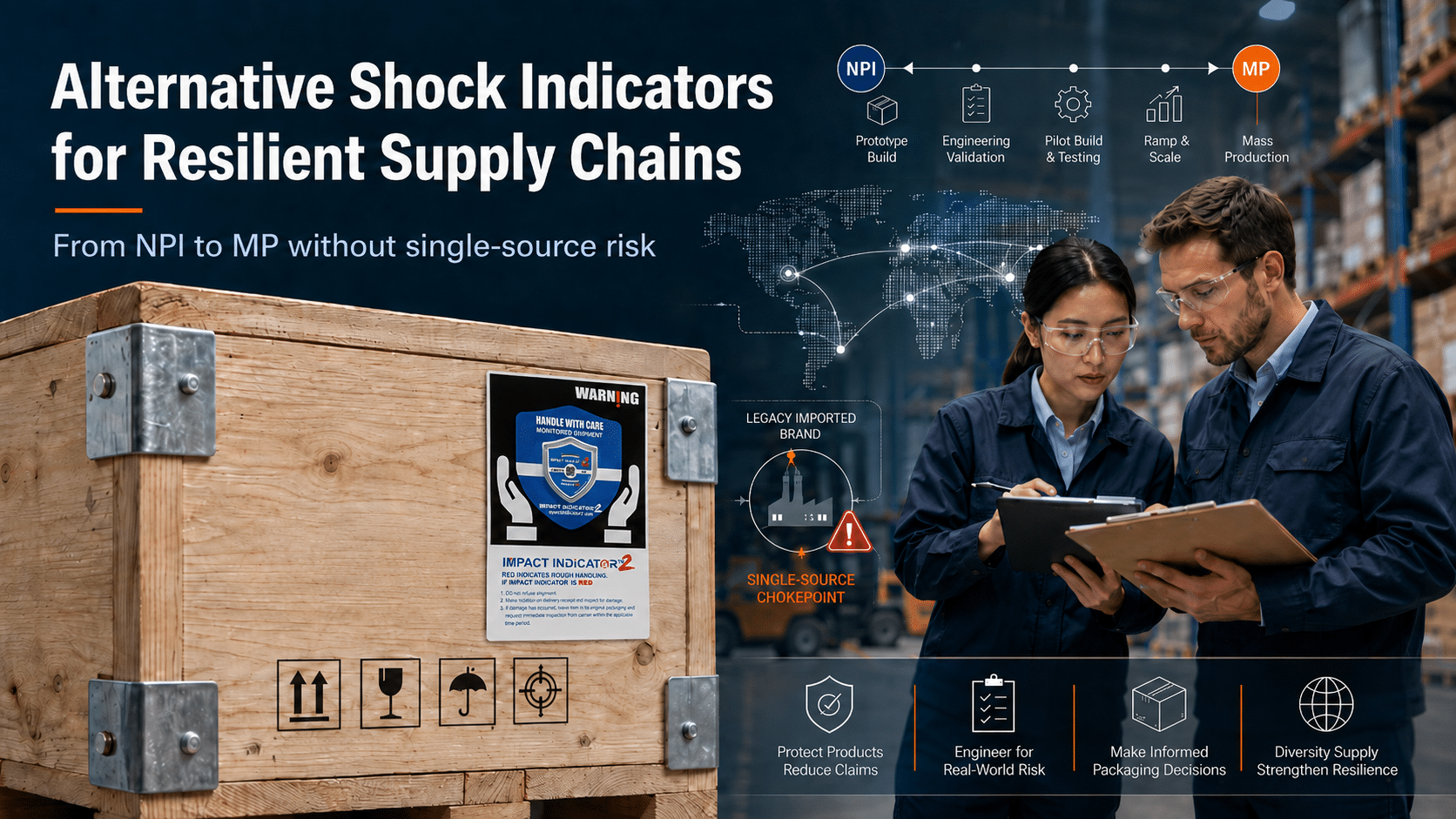
Finding reliable alternative shock indicators is often the missing piece in a resilient supply chain, yet many manufacturing engineers default to legacy imported brands just to get the Bill of Materials (BOM) approved quickly. If you are an R&D or packaging testing engineer navigating the complex transition from New Product Introduction (NPI) to Mass Production (MP), you already know the hidden dangers of blindly following outdated packaging specifications.
While simply copy-pasting a US client’s specified "legacy American brand" into your SOP might save you time today, it almost guarantees a logistical nightmare tomorrow. When mass production scales up, single-sourcing a legacy brand frequently leads to catastrophic supply chain bottlenecks, unpredictable lead times, and deteriorating quality control.
This comprehensive guide is designed to empower engineers and procurement managers. We will explore why the industry is rapidly shifting toward mechanical shock indicators like the Impact Indicator 2, how to avoid supply chain hidden costs, and—most importantly—how to successfully pitch this drop-in replacement to your strict US clients without friction.
The Hidden Trap of "Default" Specs in Mass Production
In the fast-paced world of contract manufacturing and Electronic Manufacturing Services (EMS), time is always the enemy. During the NPI phase, engineers are under immense pressure to validate designs, conduct drop tests, and finalize packaging protocols. When a US client dictates a specific traditional shock label for shipping damage prevention, the easiest path is simply to approve it.
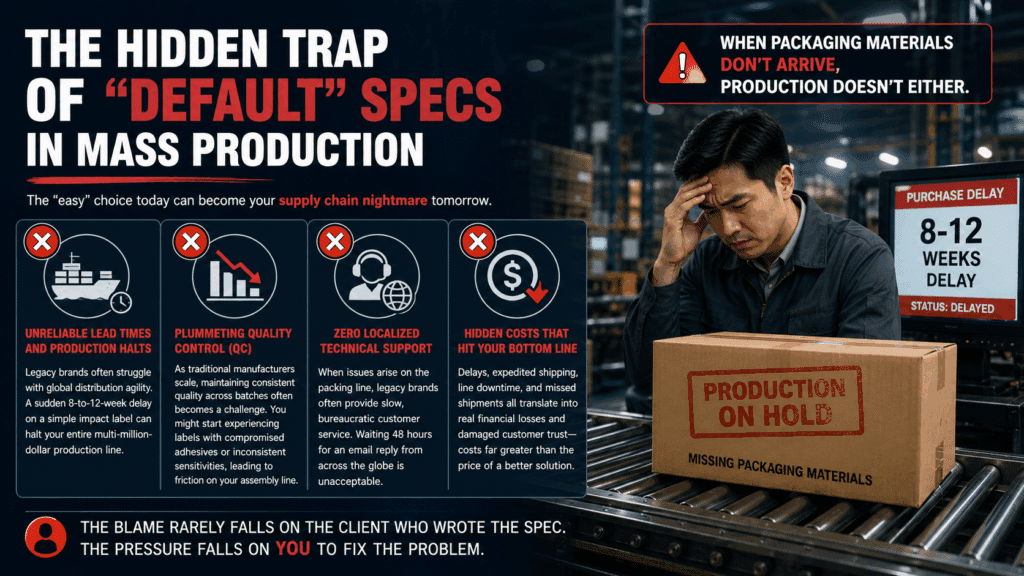
However, this "default approval" is a trap that triggers severe supply chain hidden costs down the line. Here is what happens when you rely entirely on a single, legacy imported brand for your mass production:
Unreliable Lead Times and Production Halts: Legacy brands often struggle with global distribution agility. When you need a massive restock for a peak-season shipment, a sudden 8-to-12-week delay on a simple impact label can halt your entire multi-million-dollar production line.
Plummeting Quality Control (QC): As traditional manufacturers scale, maintaining consistent quality across batches often becomes a challenge. You might start experiencing labels with compromised adhesives or inconsistent sensitivities, leading to friction on your assembly line.
Zero Localized Technical Support: When issues arise on the packing line, legacy brands often provide slow, bureaucratic customer service. Waiting 48 hours for an email reply from across the globe is unacceptable when your cargo is sitting on the loading dock waiting for compliance clearance.
Ultimately, when the production line stops because the packaging materials haven't arrived, the blame rarely falls on the US client who wrote the spec. The pressure falls squarely on the local engineers and procurement teams to "fix the problem."
The Industry Shift: Why Top Manufacturers Are Sourcing Mechanical Shock Indicators
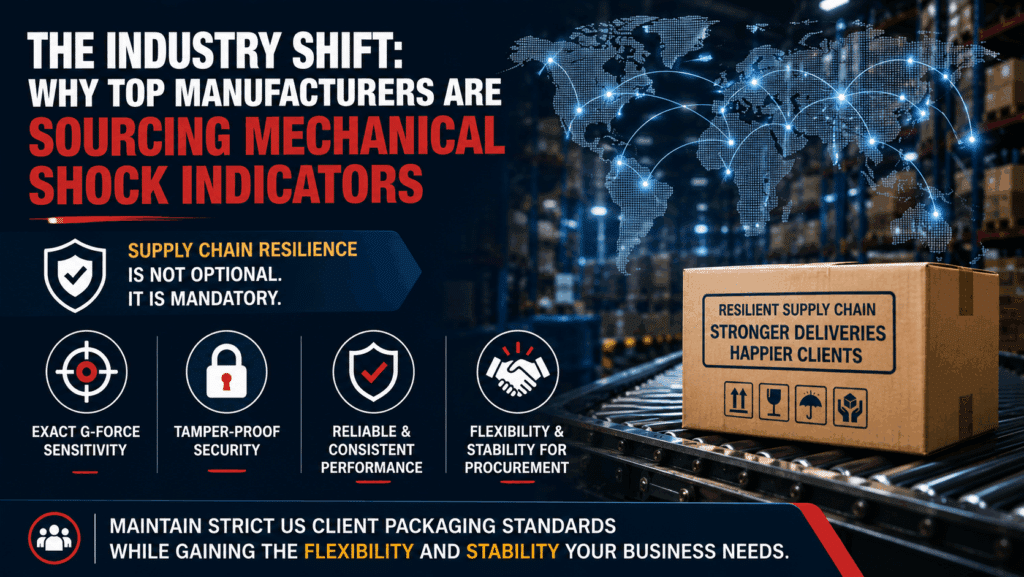
The post-pandemic manufacturing landscape has taught us one vital lesson: Supply Chain Resilience is not optional; it is mandatory.
Top-tier contract manufacturers, semiconductor fabricators, and EV component suppliers have realized that being held hostage by a single brand name is a massive liability. To safeguard their delivery schedules, these industry leaders are actively implementing "Second Source" or "Alternate BOM" strategies for their packaging components.
This shift has driven a massive surge in demand for high-quality mechanical shock indicators that function as exact drop-in replacements. The Impact Indicator 2 has emerged as the industry standard for this transition.
Why? Because the Impact Indicator 2 provides 100% identical G-force sensitivity and tamper-proof security, but without the bureaucratic baggage, unpredictable availability, or bloated brand premium of legacy products. It allows engineers to maintain the exact strict packaging standards required by US clients while giving the procurement team the flexibility and stability they desperately need.
How to Pitch Impact Indicator 2 to Your US Clients (The Engineer’s Playbook)
We understand that the biggest hurdle isn't convincing you that Impact Indicator 2 is better; it is convincing your US client to approve the deviation from their original spec.
American clients are highly pragmatic. They care about two things: Risk Mitigation and Performance Equivalency. If you approach them by saying "we want to use a cheaper brand," they will immediately reject it due to perceived quality risks. Instead, you must frame the transition as a strategic move to protect their time-to-market.
Here are the three strategic pillars you should use to win client approval, along with ready-to-use communication scripts:
1. Pitching Supply Chain Risk Mitigation
Frame the addition of the Impact Indicator 2 as a protective measure against global shipping delays.
Copy-Paste Email Script for Your Client:
"To ensure uninterrupted mass production and protect your time-to-market, we are adding the Impact Indicator 2 as a qualified alternate source on the BOM. Relying on a single legacy supplier presents a significant bottleneck risk if global logistics are disrupted. This addition guarantees we will never delay your shipments due to packaging component shortages."
2. Emphasizing Identical Technical Standards
Assure them that no internal SOPs or quality thresholds need to be lowered.
Copy-Paste Email Script for Your Client:
"We have rigorously tested the Impact Indicator 2 alongside your currently specified brand. It utilizes the same precise mechanical physics, triggers at the exact same G-force thresholds, and offers superior tamper-proof housing. Your packaging SOPs and QA inspection routines will remain 100% unchanged."
3. Highlighting Superior Quality Control
Turn the perceived weakness of switching brands into a strength by highlighting better manufacturing oversight.
Copy-Paste Email Script for Your Client:
"By validating this alternative, we benefit from a supplier that provides more agile technical support and stricter batch-to-batch consistency. This reduces the risk of false-positive activations on the factory floor, ensuring smoother operations and more reliable data for your final receiving team."
Specification Comparison: Impact Indicator 2 vs. Legacy Brands
To further support your case, use the following comparison table when submitting your engineering change request (ECR) or alternative BOM validation report:
Crucial Supply Chain Metric
Impact Indicator 2 (The Drop-In Replacement)
Legacy American Brands (The Default Spec)
Lead Time & Availability
Highly Predictable: Agile manufacturing with robust inventory management ensures zero production halts.
Unreliable: Prone to severe international backorders and extended lead times during peak seasons.
Bureaucratic: Slow response times, complex claim processes, and rigid minimum order quantities (MOQs).
Total Cost of Ownership
Optimized: Zero "brand premium" markups. High cost-efficiency perfectly suited for high-volume mass production.
Inflated: High hidden costs driven by brand monopoly, eroding overall packaging budgets.
Why You Must Test Drop Test Packaging Indicators During the NPI Phase
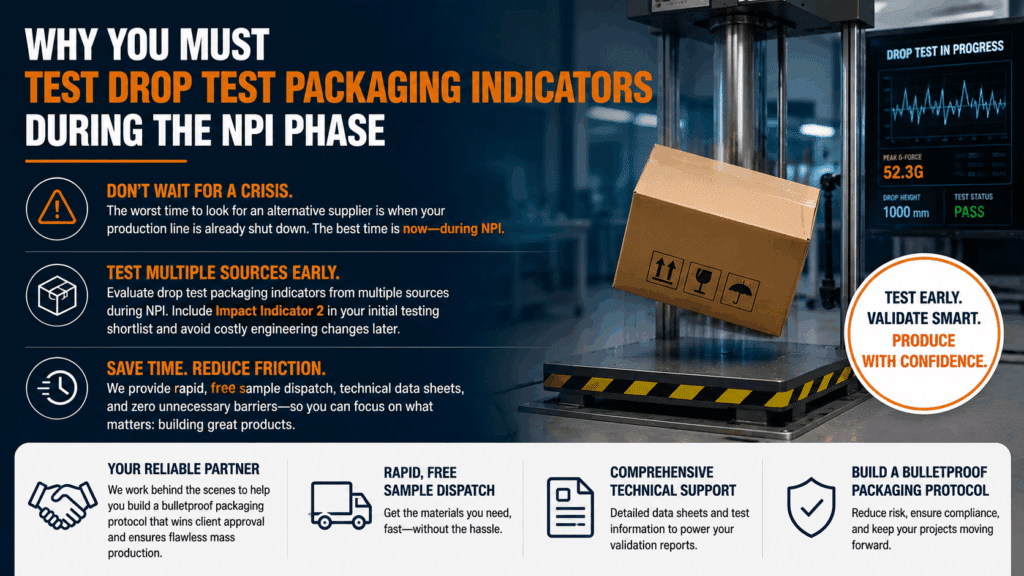
The worst time to look for an alternative supplier is when your production line is already shut down due to a shortage. The best time is right now, during the New Product Introduction (NPI) phase.
When establishing your drop test parameters and packaging SOPs, it is critical to evaluate drop test packaging indicators from multiple sources simultaneously. By including Impact Indicator 2 in your initial testing shortlist, you save yourself the massive headache of requesting an engineering change later in the product lifecycle.
At WAN-YO, we understand that an engineer's time is incredibly valuable. We remove all the friction traditionally associated with sourcing testing materials. We do not force you through endless sales calls or demand unreasonable MOQs just to run a drop test. We provide rapid, free sample dispatch and comprehensive technical data sheets so you can compile your validation reports effortlessly.
Our goal is to be your silent, reliable partner in the background—empowering you to set up a bulletproof packaging protocol that sails through client approval and runs flawlessly in mass production.
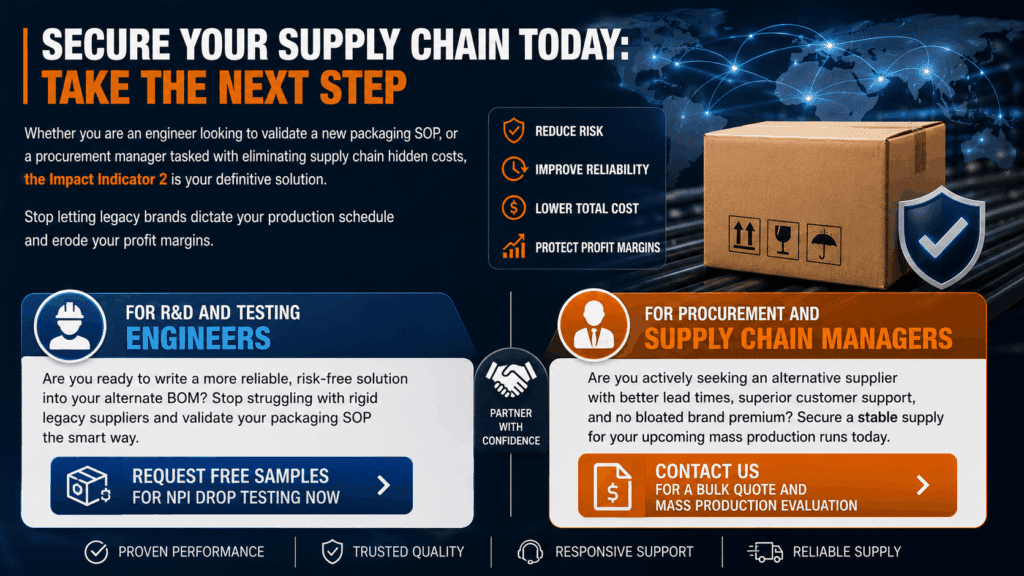
Secure Your Supply Chain Today: Take the Next Step
Whether you are an engineer looking to validate a new packaging SOP, or a procurement manager tasked with eliminating supply chain hidden costs, the Impact Indicator 2 is your definitive solution. Stop letting legacy brands dictate your production schedule and erode your profit margins.
For R&D and Testing Engineers:
Are you ready to write a more reliable, risk-free solution into your alternate BOM? Stop struggling with rigid legacy suppliers and validate your packaging SOP the smart way.
Are you actively seeking an alternative supplier with better lead times, superior customer support, and no bloated brand premium? Secure a stable supply for your upcoming mass production runs today.
Transparent supply chain is not just a trend—it’s a requirement. As goods pass through multiple touchpoints, ensuring that shipments are handled properly is crucial for protecting valuable cargo, maintaining customer satisfaction, and optimizing operational efficiency. With the increasing demand for visibility in the complete supply chain, businesses must rely on sophisticated monitoring tools that provide […]
In today’s interconnected world, the movement of goods across continents is a critical component of global trade. As industries expand their reach, the demand for reliable, safe, and efficient shipping practices has never been higher. At the heart of this global shipping industry lies a silent yet crucial player—Packaging Shock Indicators. These devices ensure the […]
We, as an advocate of preventing shipping damage, have always emphasized the importance of prevention of damaged products, but what impact does product damage have on our business? And what are the real numbers that happen every day? Why does a useful tool to reduce damage matter to our business? Let’s explore this subject. Both […]
Impact Indicator 2 shipping shock indicators play a crucial role in reducing product damage during transportation. These simple yet effective go/no-go devices act as deterrents against mishandling, making handlers think twice before being careless. But why do they work so well? The answer lies in human psychology. Why Do People Handle Packages Differently When They […]